

Service

Conversion Rate Optimisation

Most stores are losing orders somewhere specific and measurable. CRO is the cheapest work we do, because it finds revenue in traffic you are already paying for rather than asking you to buy more of it.

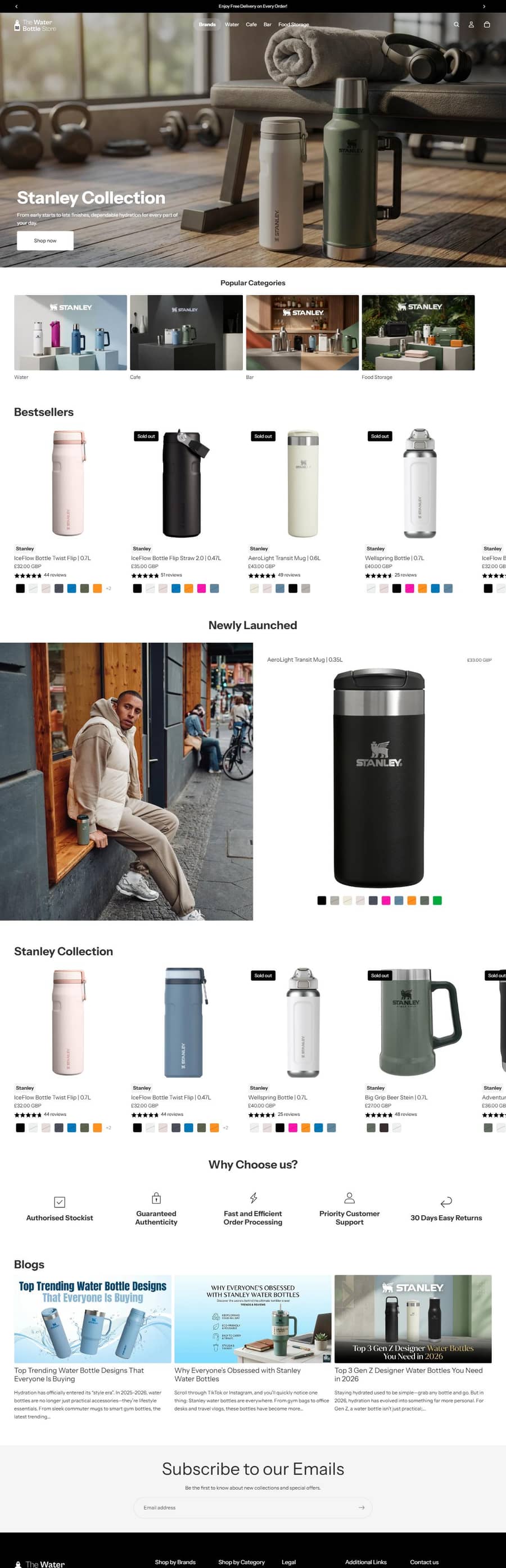
The Water Bottle Store homepage, a multi-brand Shopify storefront
The same storefront on a phone

We assessed this store for replatforming and advised against it. The work that mattered was search, product pages and post-purchase — which is this service, not a rebuild. Read the case study

Diagnosis first

Four places orders usually leak

Conversion is not one number to be improved in general. It is a sequence of specific drop-offs, and each has a different fix.

  1. People search and find nothing

    Internal search with no synonyms, no misspelling tolerance and no merchandising. Searchers convert several times better than browsers, so this is usually the first place to look.

  2. The product page does not answer the question

    Missing sizing, materials, delivery timing or returns terms. Shoppers do not email to ask — they leave and buy from whoever answered.

  3. Checkout asks too much

    Forced account creation, no express wallet, surprise shipping cost at the final step. Each is measurable and each is usually configuration rather than development.

  4. Mobile is treated as a smaller desktop

    Tap targets, sticky add-to-cart, image weight and keyboard types. Most traffic is mobile; most testing is done on a laptop.

Why we usually start here

A replatform costs a six-figure sum and takes months. A fix to internal search costs days. Both can lift revenue; only one of them can be reversed cheaply if it turns out we were wrong.

So on a first engagement we would rather look at conversion than quote a rebuild. If the gains are there, you have them in weeks. If they are not, we have learned something specific about why — which makes any subsequent build or migration better targeted than it would have been.

Research before opinion

Everyone has a view on what would convert better. Views are cheap and mostly wrong, including ours.

What is not cheap is evidence: where people actually abandon, what they actually search for and fail to find, which questions support answers over and over because the product page does not. Four weeks of that produces a list nobody argues with, which is worth more than a redesign nobody can evaluate.

The honest limit of testing

The industry talks about A/B testing as though every store can run one. In practice a product-page test needs thousands of sessions per variant before the result means anything. Most mid-market stores reach that in months, not days.

That does not make testing useless — it makes it a tool for a narrow class of questions. For everything else, the responsible approach is to fix what is demonstrably broken, measure before and after, and be clear about what you can and cannot attribute.


Platforms

Where we build.

Most stores cannot A/B test their way out of this

A valid test on a product page needs thousands of sessions per variant to reach significance. At the traffic most mid-market stores actually have, waiting for significance means waiting months while a known defect keeps costing orders. We separate the two honestly: fix what is plainly broken, test only what is genuinely a judgement call.

Get an assessment

Scope

What a build includes.

  • A measurement baseline you can trust

    Analytics and funnel tracking verified before anything changes. A CRO programme built on tracking that was never set up correctly spends its time arguing about the numbers.

  • Research, not opinion

    Session recordings, funnel drop-off, on-site search logs and support tickets. The question is where people struggle, not which layout we prefer.

  • A prioritised backlog

    Each idea scored on expected impact, confidence and effort, so the cheap high-confidence fixes ship first rather than last.

  • Tests sized to your traffic

    At realistic volumes most stores cannot run a valid A/B test on a product page in sensible time. We will tell you when to test and when to just fix it.

  • Checkout and payment work

    Express wallets, address validation, shipping clarity and guest checkout, within what your platform's native checkout allows.

  • Results read honestly

    Including the tests that lost or showed nothing. A programme where everything wins is a programme measuring itself wrongly.

How it runs

From first call to live.

  1. Baseline 1–2 weeks

    Verify tracking, establish current conversion by device, channel and template, and agree what counts as success before we touch anything.

  2. Research 2–3 weeks

    Quantitative drop-off plus qualitative evidence — recordings, search logs, support themes. Output is a ranked list of specific problems.

  3. Fix the obvious 2–4 weeks

    The changes that need no test because they are plainly defects: broken search, missing information, a checkout step that fails on iOS.

  4. Test the arguable Ongoing

    Where traffic supports it, structured experiments on the things reasonable people disagree about. Where it does not, we ship the better-reasoned option and monitor.

  5. Report Monthly

    What shipped, what moved, what did not, and what is next. Written so it survives being forwarded to a finance director.

Frequently asked questions

How much traffic do we need for CRO to be worth it?

Less than you need for A/B testing. Research-led CRO — finding and fixing actual defects — works at any volume, because a broken search box costs orders whether you have a thousand sessions a month or a million. Formal experimentation needs meaningful volume per variant; below that we fix on evidence and monitor rather than pretending a test is conclusive.

Is this a one-off project or ongoing?

Both work. A one-off assessment finds the obvious losses and is often the better first step. An ongoing programme makes sense once those are fixed and the remaining gains need sustained research and testing. We would rather sell the assessment first.

Will you need developer access to our store?

For the research phase, analytics and a read-only view are usually enough. Implementation needs either access or a working relationship with whoever has it — we are comfortable either way, provided the boundary is written down.

How do you decide what to work on first?

Expected impact, confidence in the evidence, and effort to ship. That ordering means the first few weeks are usually unglamorous configuration fixes rather than redesigns, which is also where the quickest returns are.

What if the real problem is the platform?

Then we will say so. Sometimes the checkout limitation is genuinely structural and the honest answer is a rebuild or a migration. More often it is not, which is why we start here rather than there.

Want to talk through Conversion Rate Optimisation for your store?

Tell us where it hurts. We will tell you honestly whether we are the right people for it.

Talk to an expert Book 30 minutes