
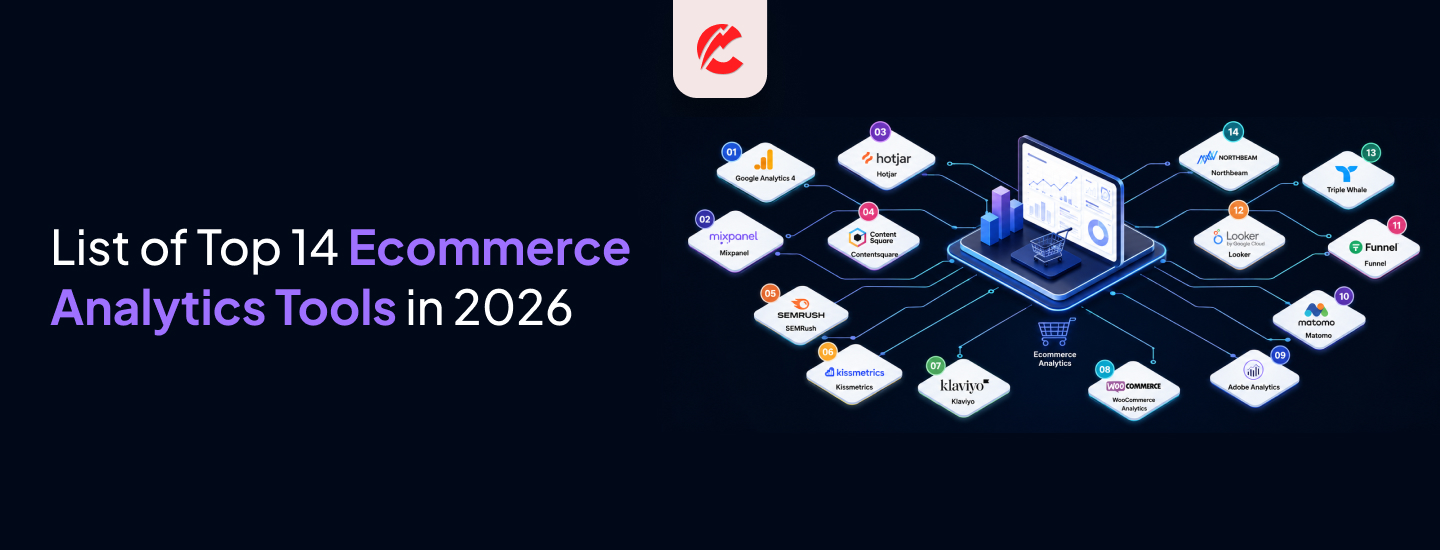
Ecommerce analytics tools help online businesses track customer behavior, monitor sales performance, analyze marketing campaigns, and improve conversion rates. These tools collect real-time data from websites, apps, and advertising platforms to provide actionable insights that increase revenue and customer retention.
In 2026, ecommerce brands rely on analytics software like Google Analytics 4, Shopify Analytics, Woopra, Optimizely, Crazy Egg, Hotjar, and Mixpanel to understand buyer journeys, reduce cart abandonment, and optimize overall store performance. From small online stores to enterprise ecommerce businesses, analytics tools have become essential for data-driven decision-making and long-term growth.
In this comprehensive guide, we review the top ecommerce analytics software that simplify data tracking, customer analysis, and performance reporting for online stores. Whether you run a small ecommerce business or a large online brand, these tools can help you identify growth opportunities and make smarter business decisions using real-time data.
⇒ Why Ecommerce Analytics Tools Matter
Modern ecommerce success depends heavily on data-driven decision-making. Without analytics, businesses rely on assumptions rather than real customer insights.
⇒ Benefits of Ecommerce Store Analytics Tools
♦ Understand Customer Behavior
Analytics tools reveal how users interact with your website, including:
- Pages they visit
- Products they view
- Time spent on site
- Purchase journey
- Exit points
This helps optimize the customer experience.
♦ Improve Conversion Rates
By tracking user behavior and sales funnels, businesses can identify why visitors leave without purchasing and optimize the checkout process.
♦ Optimize Marketing Campaigns
Analytics platforms help measure the performance of:
- Google Ads
- Facebook Ads
- Email marketing
- SEO campaigns
- Influencer marketing
You can determine which channels generate the highest ROI by tracking performance across acquisition sources and optimizing your website using one of the platforms featured in our Best E-commerce Platforms for SEO: Features & Pricing guide.
♦ Increase Revenue
Better insights lead to smarter inventory planning, improved targeting, personalized recommendations, and higher customer retention.
♦ Make Data-Driven Decisions
Instead of guessing, businesses can make strategic decisions backed by real-time data.
⇒ Key Features to Look for in Ecommerce Analytics Software
Choosing the right analytics tool depends on your business goals. However, the best platforms usually offer these essential features:
♦ Real-Time Reporting
Monitor live traffic, orders, and customer activity instantly.
♦ Customer Journey Tracking
Understand the complete buyer journey from first visit to purchase.
♦ Conversion Funnel Analysis
Identify where customers drop off during the buying process.
♦ Revenue Attribution
Track which marketing channels drive the most sales.
♦ Dashboard Customization
Create personalized dashboards tailored to your KPIs.
♦ Integration Capabilities
Ensure compatibility with platforms like:
- Shopify
- WooCommerce
- Magento
- BigCommerce
- Amazon
- Google Ads
♦ Predictive Analytics
Advanced tools use AI and machine learning to forecast sales trends and customer behavior.
⇒ Best 14 Ecommerce & Marketplace Analytics Tools (Free+Paid) in 2026
♦ Google Analytics
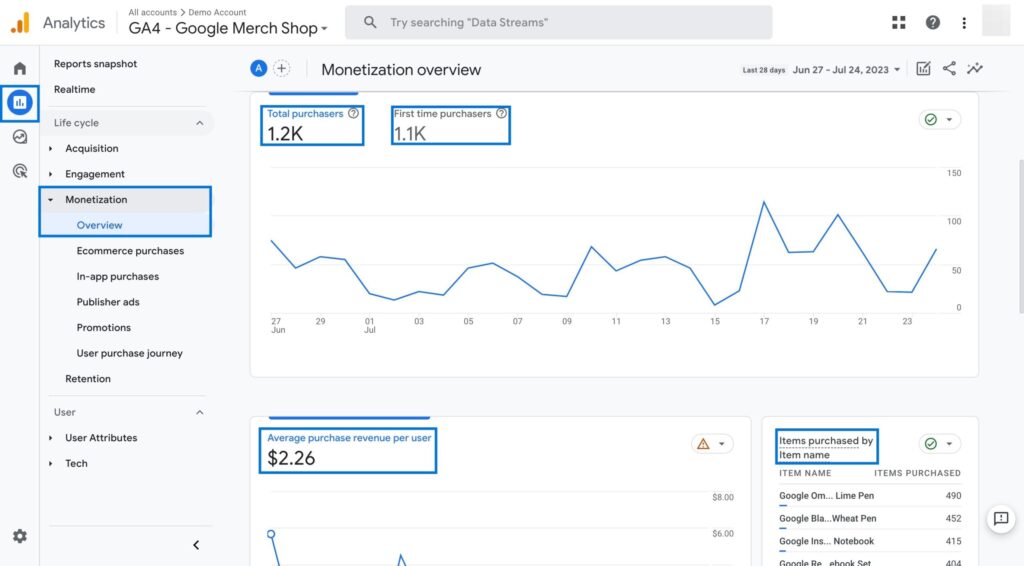
Best for: Tracking user interactions through events to understand behavior across websites and mobile apps.
Google Analytics is a widely used digital analytics platform that helps businesses measure website traffic, user engagement, and conversion performance. The latest version, Google Analytics 4 (GA4), focuses on event-driven measurement, giving a more detailed and flexible view of how users interact with digital properties.
GA4 is especially valuable for ecommerce businesses because it captures the full customer journey, from product discovery to purchase, across devices and platforms.
〉 Key ecommerce capabilities include:
- Event-Based Data Model: Instead of relying on sessions, GA4 tracks individual user actions like product views, add-to-cart actions, and completed purchases, offering more granular behavioral insights.
- Ecommerce Tracking Framework: Enables monitoring of key funnel actions such as product impressions, checkout progression, promotions, and transactions to identify drop-off points.
- Pre-Built Ecommerce Reports: Provides ready-made dashboards for product performance, sales trends, and purchase behavior, reducing the need for manual setup.
- Cross-Device Tracking: Connects user activity across mobile, desktop, and apps to deliver a unified customer journey view.
- Predictive Insights: Uses machine learning to estimate metrics like purchase likelihood and potential revenue, helping teams prioritize high-value audiences.
- Audience Building: Allows creation of segmented user groups based on behavior, purchase history, and engagement patterns for targeted marketing.
- Google Ads Integration: Connects seamlessly with advertising platforms to measure campaign performance against real revenue outcomes.
♦ Shopify Analytics
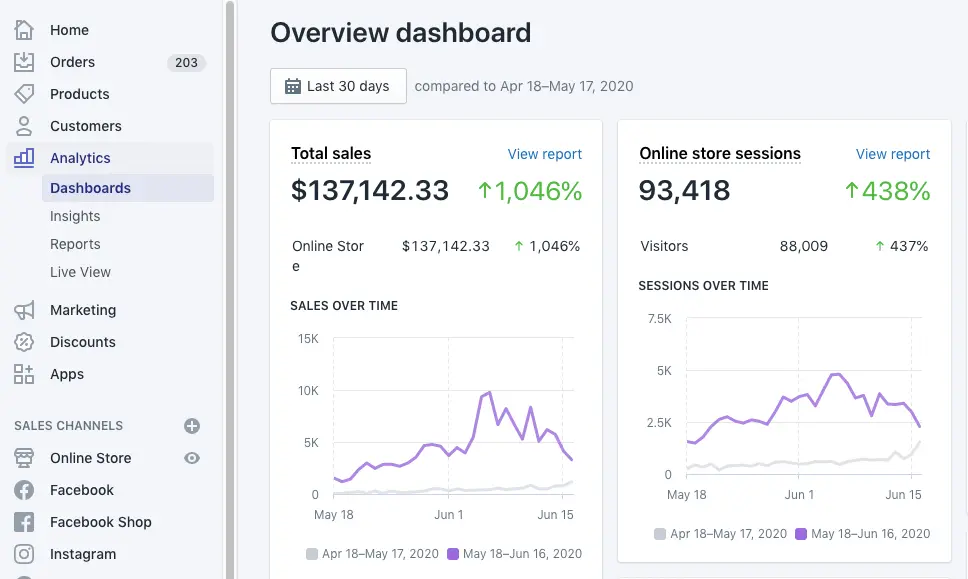
Best for: Native ecommerce performance tracking for Shopify store owners.
Shopify Analytics is built directly into the Shopify platform and provides merchants with essential insights into store performance, customer behavior, and sales trends. For businesses that need more advanced reporting capabilities, exploring the best Analytics tools for Shopify store can help uncover deeper insights and growth opportunities.
It helps ecommerce businesses make data-driven decisions without needing third-party tools.
〉 Key capabilities include:
- Sales Performance Tracking: Breaks down sales by product, time, and location.
- Customer Insights: Tracks returning customers, AOV, and lifetime value.
- Marketing Performance Data: Measures traffic sources and campaign effectiveness.
- Real-Time Dashboard: Shows live store activity and sales updates.
- Custom Reporting: Allows creation of tailored analytics reports.
- Financial Insights: Tracks revenue, taxes, and refunds.
♦ HubSpot
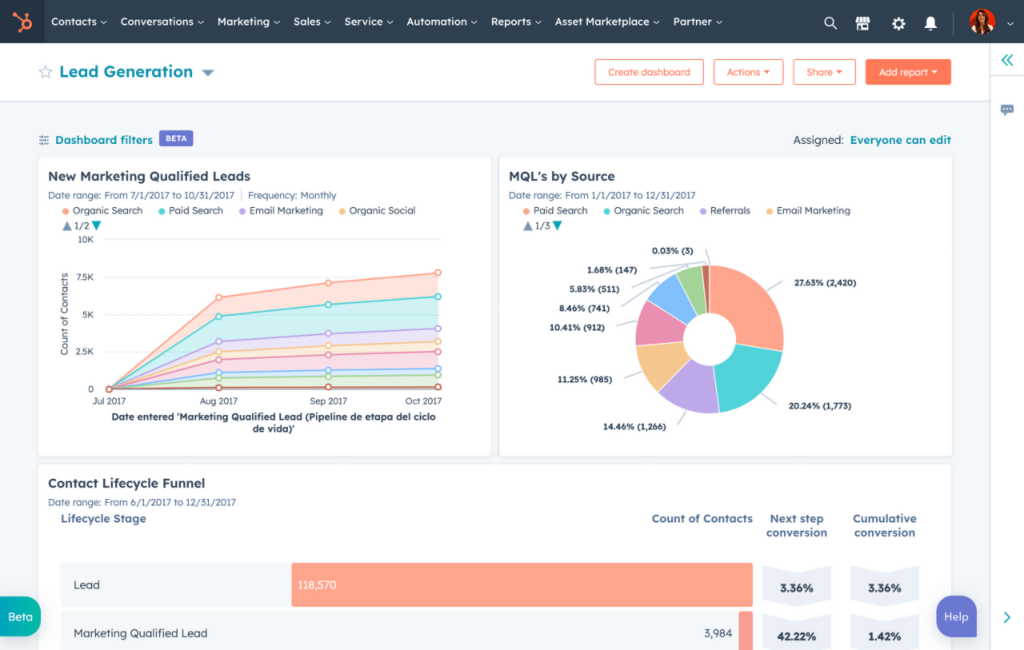
Best for: Combining ecommerce analytics with CRM, automation, and marketing workflows.
HubSpot is an all-in-one CRM platform that also offers ecommerce analytics and marketing automation capabilities. It helps businesses track customer interactions and optimize the entire sales funnel.
It is particularly useful for aligning marketing, sales, and customer service data in one system.
〉 Key capabilities include:
- CRM Integration: Centralizes customer purchase history and interactions.
- Marketing Attribution: Shows which campaigns drive conversions and revenue.
- Behavior Tracking: Monitors website visits, emails, and cart activity.
- Automation Workflows: Automates tasks like abandoned cart emails and follow-ups.
- Sales Analytics: Tracks revenue, deals, and pipeline performance.
- Custom Dashboards: Builds reports for KPIs like AOV and LTV.
♦ Adobe Analytics
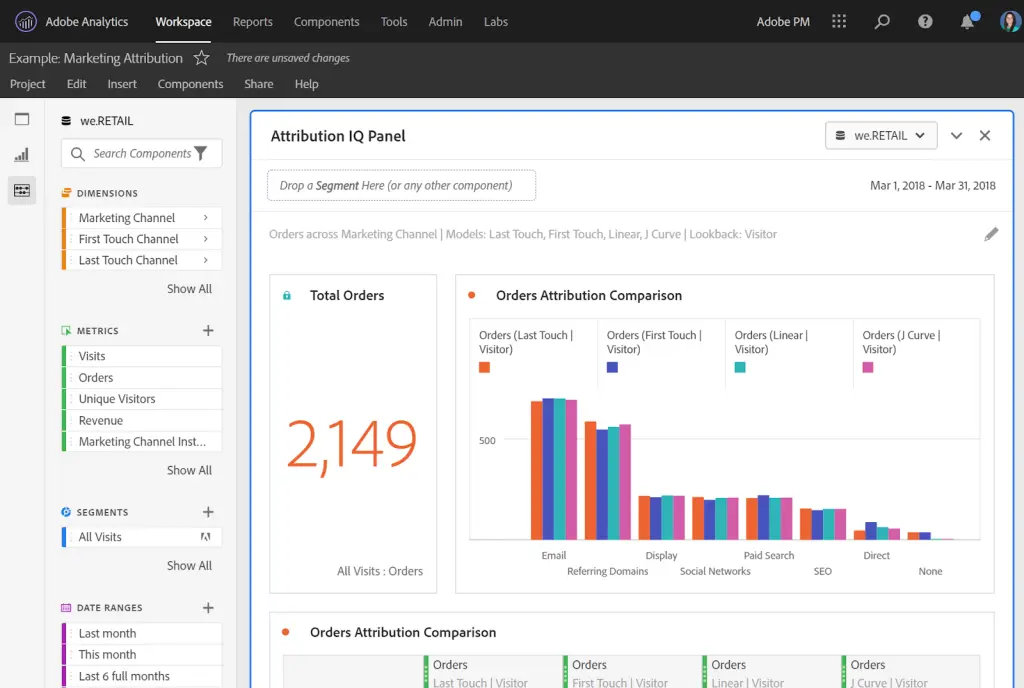
Best for: Enterprise-level ecommerce analytics with advanced segmentation and forecasting.
Adobe Analytics is a powerful enterprise analytics platform designed to deliver deep insights into customer journeys across channels. It is widely used by large ecommerce brands to analyze complex datasets.
It helps organizations understand customer behavior at scale and optimize digital performance.
〉 Key features include:
- Unified Customer Journey Tracking: Connects user interactions across web, mobile, and other channels.
- Real-Time Analytics: Provides instant insights into user behavior and transactions.
- Advanced Segmentation: Groups users based on detailed behavioral and demographic data.
- Attribution Modeling: Identifies which channels drive conversions.
- Predictive Insights: Uses AI to forecast trends and customer actions.
- Custom Reporting: Builds dashboards tailored to ecommerce KPIs.
♦ Improvado
Best for: Centralizing marketing data and improving ecommerce performance visibility across all channels.
Improvado is an AI-powered marketing analytics and data aggregation platform designed to simplify how ecommerce brands manage and analyze performance data. It brings together information from multiple sources into a single, unified reporting system.
Instead of working with fragmented dashboards, teams can view all marketing and sales performance in one place, making decision-making faster and more accurate.
〉 Core capabilities include:
- Wide Data Connectivity: Integrates with 500+ platforms including ecommerce systems like Shopify, Amazon, Walmart Connect, and various ad networks.
- Data Standardization: Automatically cleans and harmonizes data from different sources to ensure consistency in reporting and analysis.
- Custom Dashboard Creation: Offers pre-built templates and fully customizable dashboards tailored to business-specific KPIs.
- Real-Time Monitoring: Tracks campaign performance and alerts teams to anomalies or sudden changes in key metrics.
- Cross-Channel Attribution: Connects user touchpoints across channels to understand what drives conversions and revenue.
- AI-Powered Insights: Uses automation to generate reports and answer performance questions instantly, reducing manual analysis effort.
Improvado helps ecommerce teams monitor metrics like CAC, LTV, ROAS, and revenue contribution in a single unified system, improving overall marketing efficiency.
♦ Glew
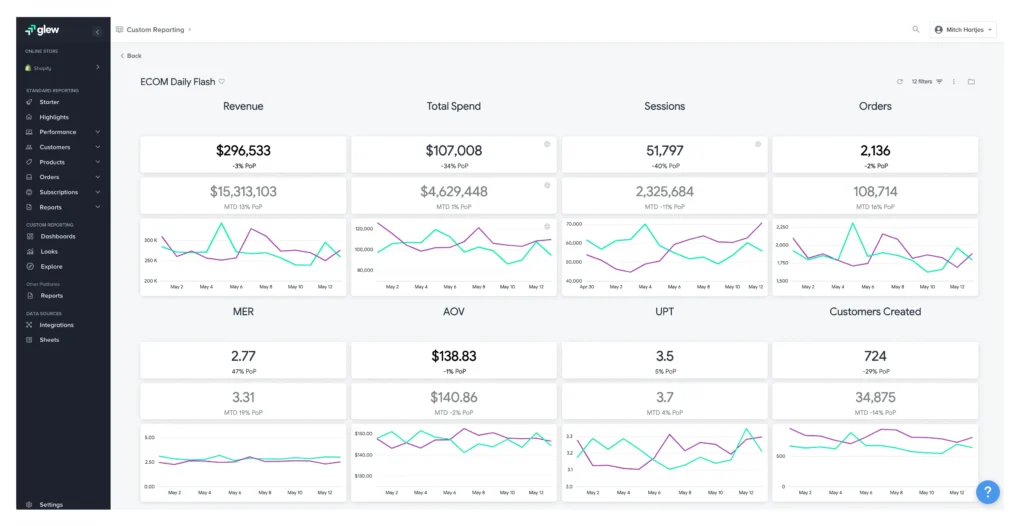
Best for: Understanding product performance and customer behavior to improve ecommerce profitability.
Glew is a business intelligence and ecommerce analytics platform designed to help brands analyze sales, customers, and marketing performance in depth. It is especially useful for merchants who want a clear view of what drives revenue and customer value.
It consolidates data from ecommerce platforms and transforms it into actionable insights for better decision-making.
〉 Key features include:
- Customer Segmentation Insights: Groups customers based on behavior, purchase history, and lifetime value to identify high-value segments.
- Product-Level Analytics: Tracks product sales, margins, and inventory performance to highlight best and worst-performing items.
- Marketing ROI Tracking: Evaluates campaign effectiveness and customer acquisition costs across channels.
- Platform Integrations: Connects with tools like Shopify, BigCommerce, and WooCommerce for centralized reporting.
- Profitability Breakdown: Shows profitability by product, channel, or customer group to support strategic planning.
- Automated Reports: Generates scheduled reports that keep teams updated without manual effort.
♦ Mixpanel
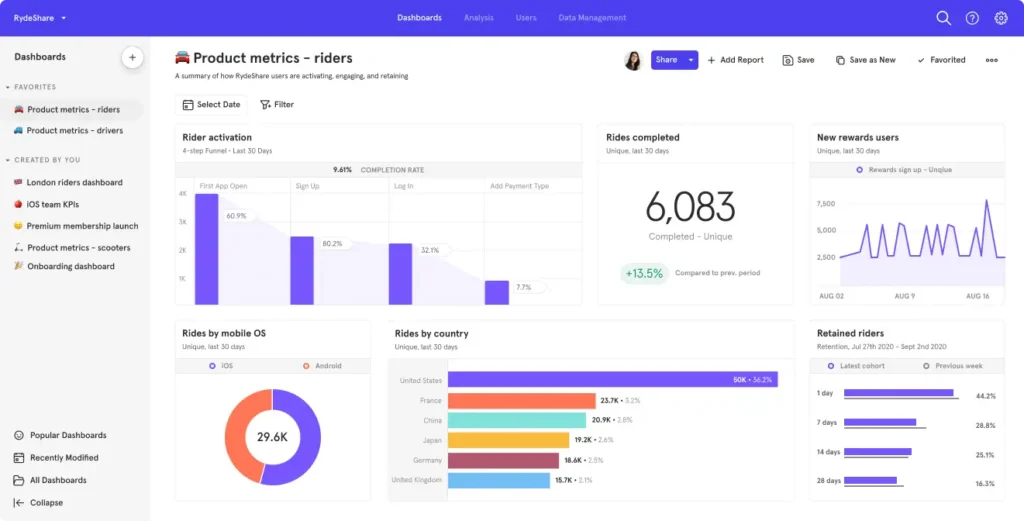
Best for: Real-time behavioral tracking of users throughout the ecommerce purchase journey.
Mixpanel is a product and event analytics tool that focuses on understanding how users interact with digital products. It is widely used in ecommerce for tracking user actions and optimizing conversion paths.
It helps businesses visualize how users move through the funnel and where they drop off, enabling faster improvements to the customer experience.
〉 Core ecommerce capabilities:
- User Journey Tracking: Monitors actions such as product views, searches, cart additions, and purchases to map the full shopping journey.
- Funnel Analysis: Identifies where users abandon the purchase process, helping optimize checkout flows and reduce drop-offs.
- Cohort Analysis: Groups users based on shared behaviors to analyze retention and long-term engagement patterns.
- Cart Behavior Insights: Analyzes cart contents and purchase patterns to uncover bundling and upsell opportunities.
- Retention Metrics: Tracks how often customers return and engage with the store over time.
- Custom Event Tracking: Allows monitoring of specific actions like discount usage, failed payments, or wishlist activity.
- Interactive Dashboards: Provides real-time reporting on revenue, engagement, and conversion metrics.
♦ Woopra
Best for: Tracking end-to-end customer journeys to improve engagement and retention strategies.
Woopra is a customer journey analytics platform that focuses on real-time behavioral tracking across multiple touchpoints. It helps ecommerce brands understand how users interact with websites, apps, and marketing campaigns.
Its strength lies in connecting behavioral data with lifecycle insights to improve customer retention.
〉 Key features include:
- Journey Mapping: Visualizes how users move across different channels before making a purchase.
- Real-Time User Tracking: Provides instant updates on customer actions such as browsing, cart activity, and checkout behavior.
- Behavior-Based Segmentation: Enables grouping of users based on actions like repeat purchases or cart abandonment.
- Retention Analytics: Measures customer lifetime value and repeat purchase behavior to improve loyalty strategies.
- Marketing Integrations: Connects with platforms like Google Ads and Facebook Ads to unify campaign data.
- Event Tracking: Captures custom interactions like promo usage or wishlist updates for deeper insights.
♦ Optimizely
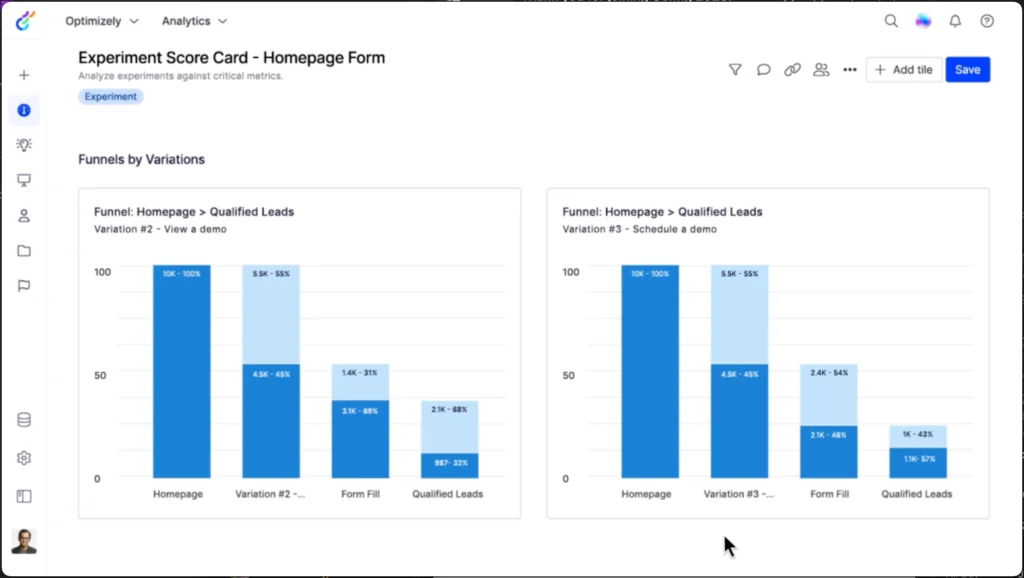
Best for: Experimenting with website experiences to improve conversions and user engagement.
Optimizely is an experimentation and optimization platform that helps ecommerce brands test and improve digital experiences using data-driven experimentation.
It enables teams to continuously refine product pages, checkout flows, and content based on real user behavior.
〉 Core capabilities include:
- A/B Testing & Multivariate Testing: Compare different versions of pages or elements to identify what drives higher conversions.
- Personalized Experiences: Deliver customized content based on user behavior, location, or audience segment.
- Behavioral Targeting: Adjust experiences for specific user groups such as new visitors or returning customers.
- Performance Measurement: Analyze experiment results to understand impact on conversion rates and revenue.
- Integration Support: Works with analytics and CRM tools to combine experimentation with broader data insights.
♦ Hotjar
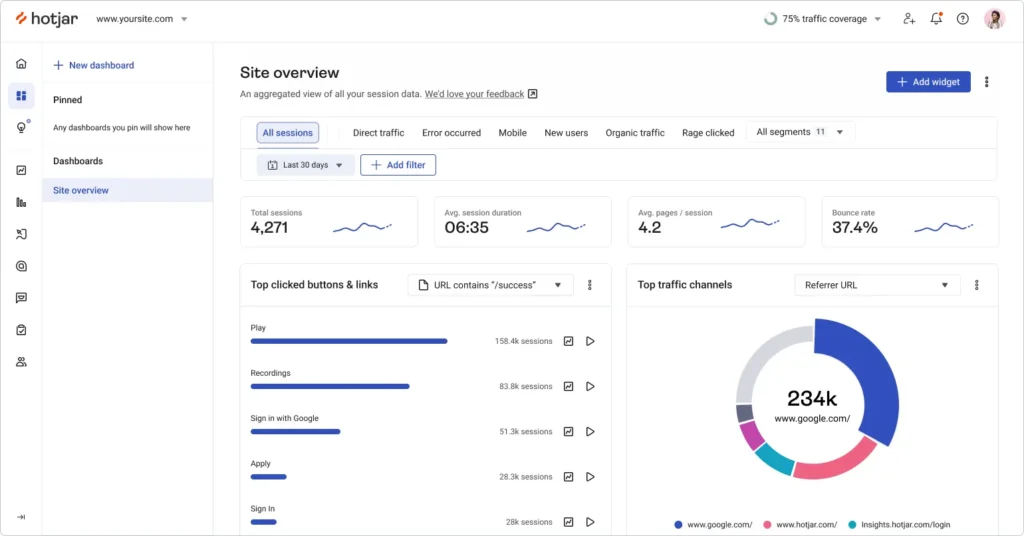
Best for: Understanding user behavior visually to improve website usability and conversion rates.
Hotjar is a behavior analytics tool that helps ecommerce teams see how users interact with their website through visual and feedback-based insights. It focuses on identifying friction points that impact conversions.
It is widely used to improve UX and optimize customer journeys based on real user behavior.
〉 Key features include:
- Heatmaps: Show where users click, scroll, and spend the most time on a page.
- Session Recordings: Replay real user sessions to identify navigation issues and usability problems.
- Feedback Tools: Collect direct user opinions through surveys and feedback widgets.
- Funnel Tracking: Identify where users drop off during the checkout or browsing process.
- Form Analytics: Detect issues in checkout or signup forms that may cause abandonment.
- Behavior Triggers: Collect feedback based on user actions like inactivity or exit intent.
♦ Kissmetrics
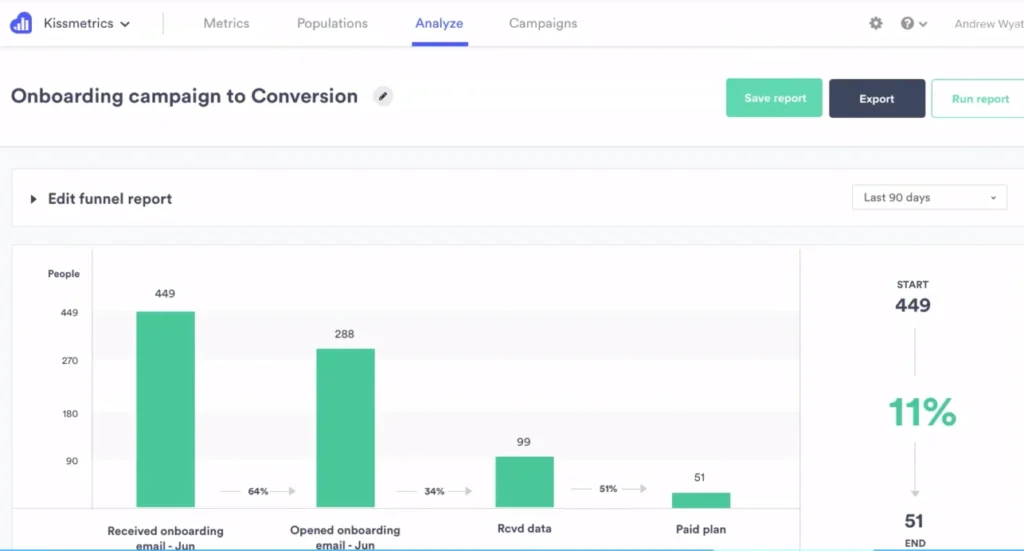
Best for: Deep customer behavior tracking to improve retention and conversion performance.
Kissmetrics is an analytics platform focused on understanding individual user behavior throughout the customer lifecycle. It is especially useful for optimizing funnels and increasing customer lifetime value.
It provides detailed insights into how users interact with ecommerce platforms over time.
〉 Key features include:
- Customer Journey Tracking: Follows users from first visit to purchase completion.
- Funnel Reporting: Identifies drop-off points in conversion funnels.
- Cohort Analysis: Studies user groups over time to understand retention trends.
- Revenue Attribution: Connects customer actions directly to revenue outcomes.
- User Segmentation: Creates targeted groups based on behavior or demographics.
- Platform Integrations: Works with ecommerce tools, CRMs, and marketing systems.
♦ Crazy Egg
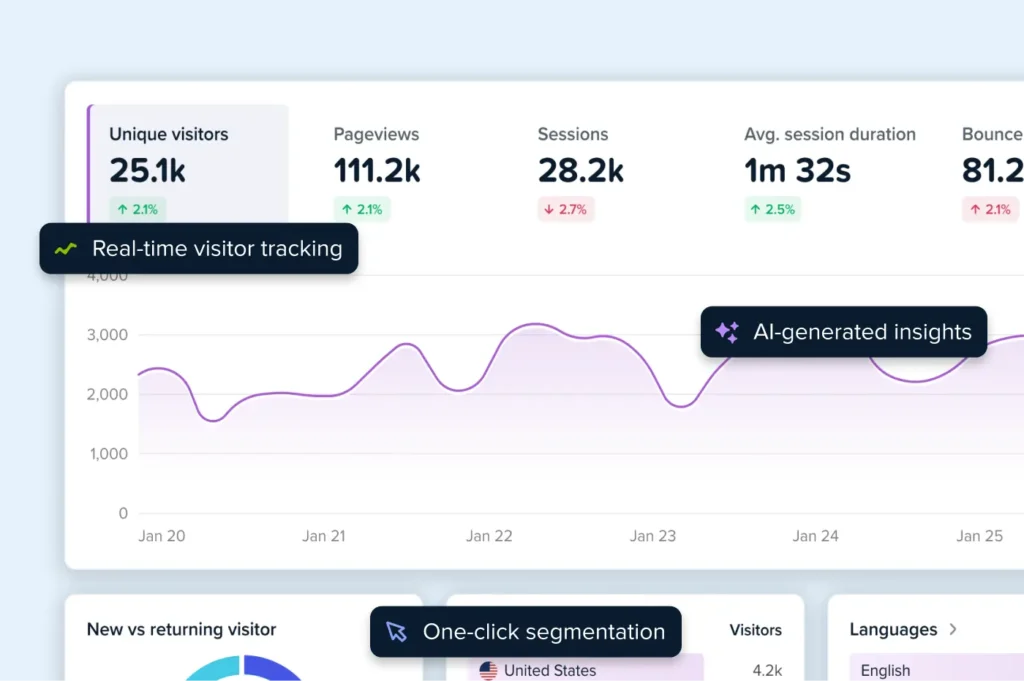
Best for: Diagnosing website usability issues and improving conversion-focused design.
Crazy Egg is a visual analytics tool that helps ecommerce businesses understand how users interact with their websites. It focuses on identifying design issues and optimizing page layouts for better performance.
It is commonly used to improve usability and reduce friction in the shopping experience.
〉 Key features include:
- Heatmaps & Scroll Maps: Show where users click and how far they scroll on pages.
- Session Replays: Allow playback of real user sessions to analyze behavior.
- A/B Testing Tools: Test different versions of pages to improve conversion rates.
- Error Detection: Identifies broken links or slow-loading elements affecting UX.
- User Segmentation: Compares behavior between new and returning visitors.
- Reporting Tools: Generates insights for optimizing page performance.
♦ Daasity
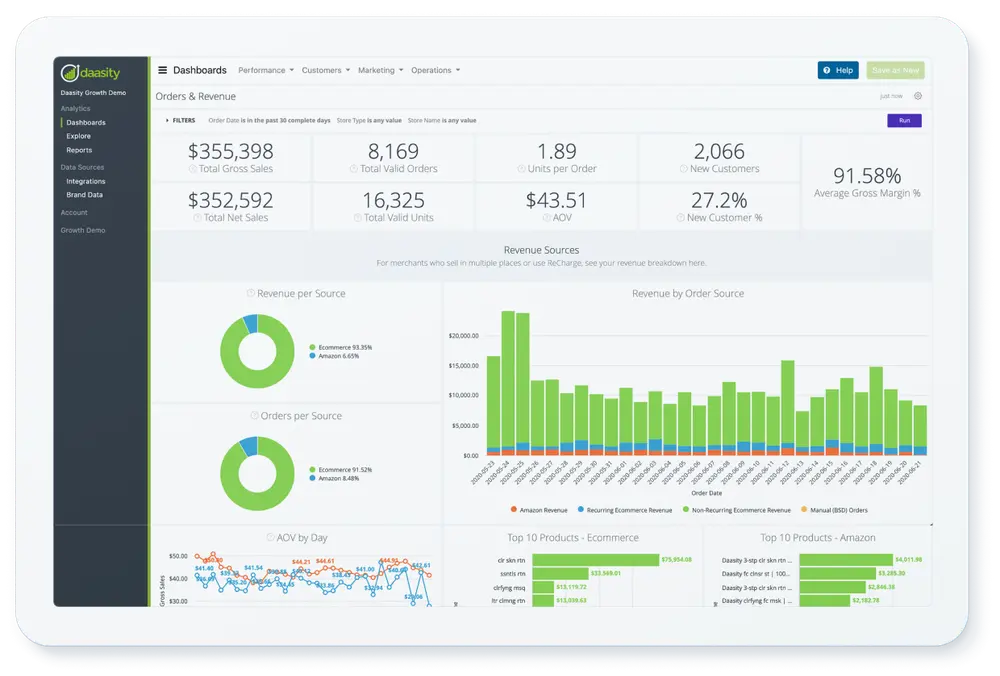
Best for: Data unification and reporting for mid-sized DTC ecommerce brands.
Daasity is a data analytics and orchestration platform designed to centralize ecommerce, marketing, and operational data into one system.
It is mainly used by direct-to-consumer (DTC) brands looking for structured reporting and performance insights.
〉 Key features include:
- Data Integration: Combines data from ecommerce, ads, and marketing platforms.
- Customer Segmentation: Helps identify high-value and at-risk customers.
- Performance Benchmarking: Compares KPIs like CAC and AOV across channels.
- Automated Reporting: Generates scheduled reports for key metrics.
- Attribution Insights: Shows how marketing channels contribute to revenue.
♦ Triple Whale
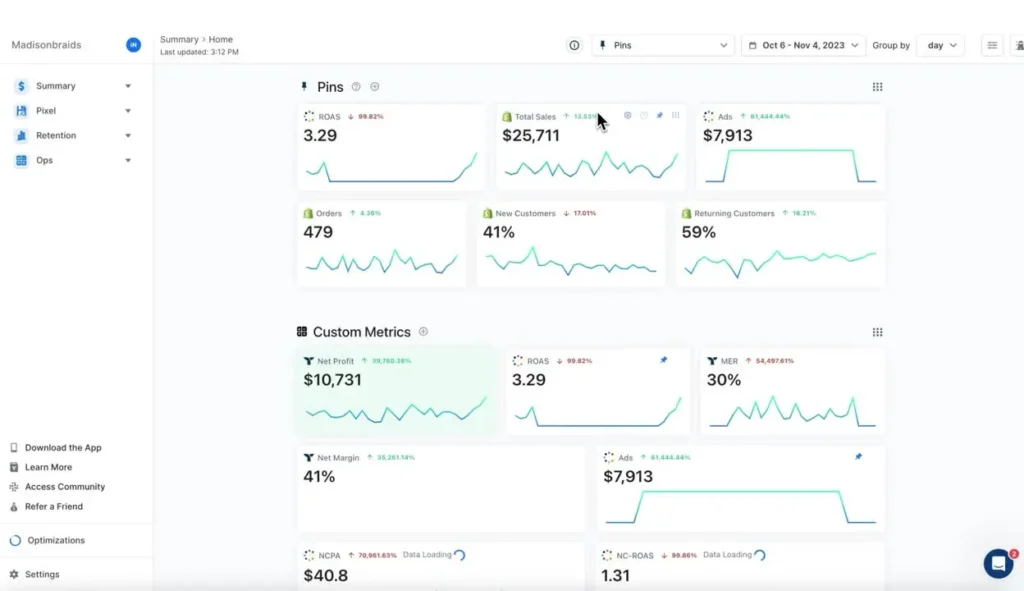
Best for: Consolidating ecommerce marketing, ads, and profitability metrics in one dashboard.
Triple Whale is a performance analytics platform designed primarily for Shopify-based ecommerce brands. It helps businesses understand profitability and marketing efficiency across channels.
It brings together advertising, sales, and customer data into a single view.
〉 Core features include:
- Unified Analytics Dashboard: Combines data from multiple marketing platforms.
- Attribution Modeling: Identifies which channels drive conversions.
- Profitability Tracking: Measures revenue after ad spend and costs.
- Customer Lifetime Value Insights: Predicts long-term customer value.
- Automated Alerts: Notifies teams about changes in key metrics.
- Ad Performance Analysis: Evaluates which creatives and campaigns perform best.
⇒ How to Choose the Right Ecommerce Analytics Tool
Selecting the right ecommerce analytics tool from this list depends on your business model, growth stage, and data needs. Instead of focusing only on features, it’s important to follow a structured approach that aligns with your goals and technical capacity.
♦ Step 1: Identify Your Business Size and Stage
The right tool often depends on how mature your ecommerce business is:
- Early-stage startups using Shopify can start with Shopify Analytics and Google Analytics 4 for basic tracking and insights.
- Growing DTC brands may need advanced platforms like Glew or Triple Whale for deeper profitability and marketing analysis.
- Large enterprises typically require scalable solutions such as Adobe Analytics or data-unification tools like Improvado.
♦ Step 2: Define Your Core Business Questions
Before choosing a tool, clearly identify what you want to solve:
- Are you trying to improve conversion rates?
- Do you need better visibility into customer lifetime value (CLV)?
- Is your focus on measuring marketing ROI and attribution?
Your answers will guide your selection. For example, behavior-focused tools like Hotjar or experimentation platforms like Optimizely are ideal for improving conversion rates and user experience.
♦ Step 3: Evaluate Your Team’s Technical Capability
Your internal resources matter as much as the tool itself.
- Advanced platforms like Adobe Analytics require strong technical expertise and dedicated analysts.
- Plug-and-play tools like Triple Whale or Glew are easier to set up and use without heavy technical involvement.
- If your team is small, prioritize tools with ready-made dashboards, automation, and simple reporting.
♦ Step 4: Check Integration with Your Existing Tech Stack
Your analytics tool must work seamlessly with your current ecosystem.
Make sure it integrates with your:
- Ecommerce platform (Shopify, WooCommerce, etc.)
- Advertising platforms (Google Ads, Meta Ads)
- Email marketing tools
- CRM and customer support systems
Platforms like HubSpot and Daasity are especially strong when it comes to unifying data across multiple systems.
♦ Step 5: Consider Scalability and Long-Term Growth
Choose a tool that not only solves today’s problems but also supports future growth.
- Startups should focus on simplicity and affordability.
- Mid-sized brands should prioritize automation and multi-channel reporting.
- Enterprises should invest in scalability, customization, and predictive analytics.
A tool like Mixpanel or Adobe Analytics can grow with your business as data complexity increases.
By following this structured approach, you can confidently choose an ecommerce analytics tool that matches your goals, improves decision-making, and supports long-term business growth.
⇒ Final Thoughts
Ecommerce analytics tools are no longer optional they are essential for sustainable online business growth. The ability to track customer behavior, measure marketing performance, and optimize conversions gives businesses a significant competitive advantage.
Whether you choose Google Analytics 4 for foundational reporting, Hotjar for behavior insights, or Adobe Analytics for enterprise intelligence, the right tool can transform your ecommerce strategy.
The key is to start with clear business goals, track meaningful metrics, and continuously use data to improve customer experience and profitability.
Investing in ecommerce analytics today means building a smarter, more scalable online business for tomorrow.