

Which ecommerce platform is best for SEO in 2026? The answer depends on your business size, technical expertise, and priorities like speed, customization, and small business scalability.
With Google emphasizing Core Web Vitals, mobile-first indexing, and helpful content, choosing a platform with strong built-in SEO tools or flexibility for advanced optimization can make or break your organic traffic and sales.
In this guide, we compare the top 9 best ecommerce platforms for SEO, focusing on SEO optimization features, page speed potential, structured data support, URL control, and realistic pricing.
Best-Rated E-Commerce Platforms for SEO Compared
Here’s a quick overview table (detailed breakdowns follow):
Platform
Best For
SEO Strengths
Starting Price (2026)
Speed Rating
Small Business Score
WooCommerce
Content-heavy, flexible stores
Full control, plugins like Yoast/Rank Math
Free (hosting extra)
Good (hosting-dependent)
High
Shopify
Beginners & fast scaling
Automated basics, CDN, schema
$39/mo
Excellent
Very High
BigCommerce
Mid-market with large catalogs
Built-in advanced tools, faceted nav
$39/mo
Excellent
High
Adobe Commerce (Magento)
Enterprise & custom needs
Deep customization, headless options
Free (open source) or custom
Good (optimization needed)
Medium
Wix eCommerce
Design-focused small businesses
SEO Wiz, AI tools, clean code
~$17–29/mo
Good
High
Note: (Data synthesized from platform docs and industry analyses; prices approximate and may vary with annual billing or sales volume.)
What Makes an Ecommerce Platform Good for SEO?
Before we review each platform, it’s important to understand the SEO criteria that separate the best from the rest. Here’s what every serious ecommerce store owner should look for:
1. Technical SEO Foundation
- Custom meta titles and descriptions for products, categories, and pages
- Editable URL slugs — clean, keyword-rich URLs without forced subfolders
- 301 redirect manager to avoid broken links after restructuring
- Robots.txt and .htaccess file access for crawler control
- Canonical tag management to prevent duplicate content penalties
2. Core Web Vitals & Page Speed
- Largest Contentful Paint (LCP) — how fast your main content loads
- Cumulative Layout Shift (CLS) — visual stability of your page
- Interaction to Next Paint (INP) — responsiveness to user input
- Google uses these as direct ranking signals since 2021
3. Structured Data & Schema Markup
- Product schema (price, availability, ratings) enables Rich Snippets in Google
- Breadcrumb schema improves click-through rate from SERPs
- FAQ and HowTo schema can earn featured snippets
4. Content & Blogging Capabilities
- Built-in blog with SEO-optimized templates
- Ability to add long-form content, internal links, and categories
- Support for image alt tags, heading hierarchy, and keyword density
5. Mobile Optimization
- 100% responsive, mobile-first theme library
- Google indexes mobile version first — this is non-negotiable in 2026
Choose the Right SEO Friendly E-Commerce Platform
1. WooCommerce (WordPress) – Best for Ultimate SEO Control & Content Marketing
WooCommerce powers flexible online stores on WordPress, inheriting the CMS’s legendary SEO strengths. You get complete control over permalinks, .htaccess, and server-level optimizations.
SEO Features
- Complete control over URLs, meta tags, robots.txt, and .htaccess.
- Powerful plugins: Yoast SEO or Rank Math for on-page optimization, schema, redirects, and audits.
- Excellent for topic clusters via WordPress blogging—ideal for long-form content that builds topical authority.
- Breadcrumbs, image optimization, and custom schema via plugins.
- Strong for best ecommerce platforms with seo optimization for small businesses that want blogging alongside products.
Speed & Performance: Depends on hosting and optimization (use caching/CDN plugins). Can achieve excellent Core Web Vitals with proper setup.
Pros: Free core, unmatched customization, great for SEO experts or agencies.
Cons: Requires technical knowledge; performance varies with plugins/hosting. Maintenance is on you.
Pricing: Free (plus hosting ~$5–50/mo, themes/plugins extra). No transaction fees if using compatible gateways.
Best for: Small to medium businesses focused on content-driven SEO and organic growth.
Explore our WooCommerce development services for expert setup.
2. Shopify – Best Overall for Ease, Speed & Built-in SEO

Shopify handles the bulky technical SEO (like canonical tags and sitemaps) automatically. In 2026, it is aggressively integrating generative AI via Shopify Magic and the new Commerce Components. While it lacks the deep server access of WooCommerce, its app ecosystem allows for robust GEO integration, making it a top choice for fast-moving brands.
SEO Features
- Automatic sitemaps, robots.txt, canonical tags, and product schema (JSON-LD).
- Customizable meta titles/descriptions, blog for content marketing.
- Fast CDN, mobile-optimized themes, and HTTPS by default.
- Redirect manager and basic URL customization (some limitations like “/products/” prefix).
Speed & Performance: Excellent thanks to global CDN and optimized infrastructure—consistently strong Core Web Vitals scores.
Pros: Beginner-friendly, scalable, strong app ecosystem for advanced SEO if needed.
Cons: Less backend access; some URL rigidity; apps can add costs.
Pricing: Basic ~$39/mo (or lower annually), Shopify plan ~$105/mo, Advanced ~$399/mo, Plus from $2,300/mo. Transaction fees apply unless using Shopify Payments.
Best for: Small businesses wanting quick launches and reliable SEO optimization without deep technical work, while more complex or tailored requirements can be supported through Custom Shopify Development Services
3. BigCommerce – Strong Built-in Tools for Scaling Stores
BigCommerce stands out for its built-in advanced SEO tools. Unlike other SaaS platforms that require costly apps for basic functionality, BigCommerce offers customizable hreflang tags for international SEO, automatic microdata (rich snippets) for products, and granular control over noindex/noindex tags.
SEO Features
- Customizable URLs, meta tags, auto sitemaps, 301 redirects, and rich snippets/schema.
- Faceted navigation with proper canonical handling.
- Built-in blog, analytics integration with Google tools.
- Strong mobile optimization and performance focus.
Speed & Performance: Very good, with optimized infrastructure for large catalogs.
Pros: Unlimited products/bandwidth on most plans, multi-channel selling, no transaction fees with third-party processors.
Cons: Higher tiers for advanced features; some customization needs devs.
Pricing: Standard ~$39/mo, Plus ~$105/mo, Pro ~$399/mo, Enterprise custom.
Best for: Growing businesses with larger inventories seeking balanced SEO power.
4. Shopify Plus – Best for Enterprise & High-Volume Brands

Shopify Plus is the enterprise-grade version of Shopify, built specifically for large-scale, high-
growth, and high-revenue businesses. It removes many limitations of standard Shopify plans
and offers advanced technical capabilities, dedicated support, and greater flexibility for
serious SEO optimization at scale.
SEO Features
- Everything available in standard Shopify, plus enhanced control over URL structures
and redirects. - Advanced automation and scripting via Shopify Scripts and Checkout Extensibility.
- Superior headless commerce options (Hydrogen + Oxygen) for maximum page
- speed and Core Web Vitals performance.
- Priority support for technical SEO issues and faster indexing.
- Advanced API access and better integration with enterprise SEO tools (e.g., custom
schema implementation, advanced analytics). - Multi-store management and international SEO capabilities with improved hreflang
handling. - Dedicated IP addresses and enhanced CDN performance for large catalogs.
Speed & Performance: Excellent — often superior to standard Shopify due to dedicated resources, advanced headless setups, and optimized infrastructure. Many Shopify Plus stores achieve top tier Core Web Vitals scores consistently.
Pros:
- Highly scalable for businesses doing $1M+ in annual revenue.
- Greater customization and developer flexibility.
- No transaction fees when using Shopify Payments.
- Enterprise-level security, support, and account management.
Cons:
- Significantly higher starting price.
- Still some platform limitations compared to fully open-source solutions like
- WooCommerce or Adobe Commerce.
- Best results require experienced developers or agencies.
Pricing: Starts at $2,300 per month (billed annually), with custom pricing for very large
enterprises. No transaction fees with Shopify Payments.
Best for: High-volume ecommerce brands, enterprise businesses, and fast-growing
companies that need reliability, speed, and scalability while maintaining strong SEO
performance.
5. Adobe Commerce (Magento) – Best for Enterprise-Level Customization
For complex, high-traffic stores, Magento (now Adobe Commerce) offers unparalleled technical SEO depth.
SEO Features
- Full control over URLs, meta tags, canonical tags, and XML sitemaps.
- Advanced multi-store and multilingual SEO support for global ecommerce brands.
- Headless commerce and PWA support for faster page experiences and better Core Web Vitals.
- Custom schema markup implementation for products, categories, and reviews.
- Flexible redirect management and crawl optimization capabilities.
- Scalable architecture for handling large product catalogs and enterprise-level traffic
Speed & Performance
- AI-powered SEO setup and optimization recommendations.
- Custom schema markup and structured data support.
- Bulk 301 redirects and editable meta titles/descriptions.
- Mobile-optimized templates with automatic responsive design.
- Automatic XML sitemap generation and robots.txt editing.
- Built-in image optimization and lazy loading for better speed.
Pros: Highly scalable for international SEO.
Cons: Steep learning curve and high maintenance.
Pricing: Open Source free (self-hosted); Enterprise custom (expensive).
Best for: Large enterprises with dev teams.
6. Wix eCommerce – Beginner-Friendly with AI SEO Support
Wix has significantly evolved. With the release of Wix Harmony, the platform now offers a step-by-step SEO checklist and AI-powered optimization suggestions. In 2026, Wix passes Core Web Vitals at a rate of 71-75%, positioning it as a technically viable option for small businesses.
SEO Features
- AI-powered SEO setup and optimization recommendations.
- Custom schema markup and structured data support.
- Bulk 301 redirects and editable meta titles/descriptions.
- Mobile-optimized templates with automatic responsive design.
- Automatic XML sitemap generation and robots.txt editing.
- Built-in image optimization and lazy loading for better speed.
Pros: Very user-friendly; you get automatic sitemaps; excellent mobile optimization default settings; improved robots.txt editing.
Cons: Still lower control over server-side headers; lacks the advanced GEO plugins available for WordPress.
Speed & Performance: Solid managed hosting.
Pricing: Starts around $17–29/mo for ecommerce plans.
Best for: Design-oriented small businesses new to SEO.
7. Squarespace – Clean Design with Automatic SEO Basics

Squarespace is often criticized for rigidity, but its 2026 updates have strengthened its technical SEO. It automatically handles SSL security, creates XML sitemaps, and ensures responsive templates. If your SEO strategy relies heavily on visual storytelling (like fashion or art), Squarespace offers a polished foundation.
SEO Features
- Automatic XML sitemap generation and SSL security.
- Clean URL structures, meta tags, and redirect management.
- Mobile-first responsive templates optimized for UX.
- Built-in blogging tools for content marketing and internal linking.
- Automatic image optimization and lightweight page structure.
- LocalBusiness schema support for local SEO visibility.
Pros: Naturally fast templates (high CWV pass rate); minimal bloat code; automatic LocalBusiness schema generation.
Cons: Rigid URL structures; limited ability to implement custom entity-based internal linking; export difficulties if you need to scale to a larger platform.
Pricing: $14–44/mo range.
Best for: Creative brands prioritizing aesthetics alongside basics.
8. Shift4Shop – Feature-Packed with Built-in SEO

Previously known as 3dcart, Shift4Shop offers a free plan for US merchants utilizing their payment gateway. It includes essential SEO tools like customizable meta titles, automatic sitemaps, and SEO-friendly URLs at no upfront cost.
SEO Features
- Centralized SEO dashboard for easier optimization management.
- Bulk meta title and description editing.
- Automatic product and review schema markup.
- SEO-friendly URLs and customizable redirects.
- Integrated blogging tools for content marketing.
- XML sitemap generation and canonical tag support
Pros: Good value for bootstrapped SMBs; covers all technical SEO basics without heavy investment.
Cons: Lacks advanced GEO features compared to BigCommerce; the user interface feels dated; third-party app support is limited.
Pricing: From ~$39/mo (with conditions).
Best for: Merchants wanting comprehensive tools affordably.
9. PrestaShop – Flexible Open-Source Option for International Stores
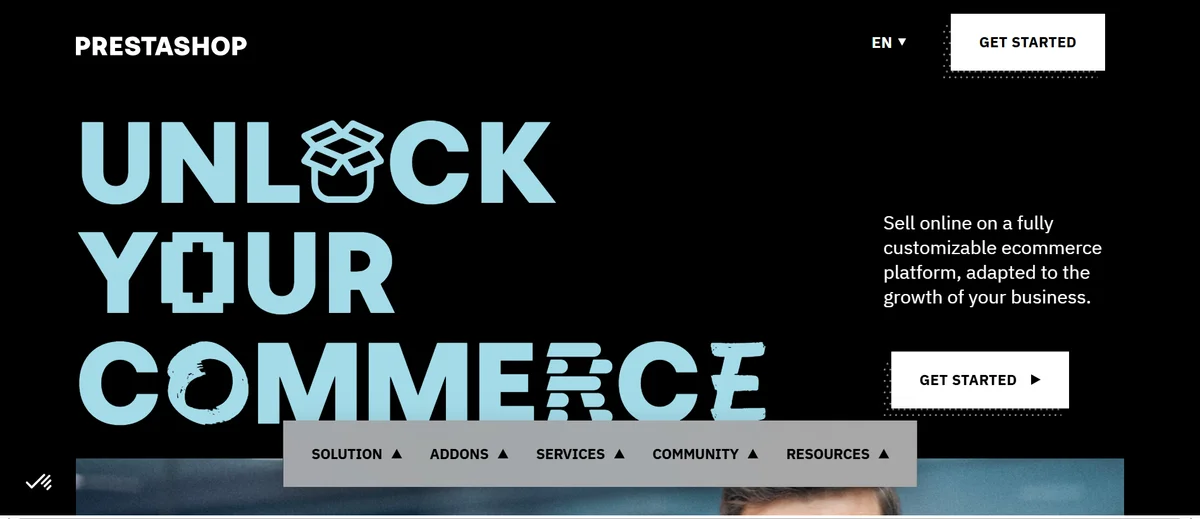
PrestaShop remains a favorite in Europe because of its robust multilingual SEO capabilities at zero software cost. It offers deep customization of meta tags, breadcrumbs, and category structures.
SEO Features
- Native multilingual and hreflang support for international SEO.
- Fully customizable URL structures and metadata.
- Advanced robots.txt and canonical tag management.
- SEO modules for JSON-LD schema and rich snippets.
- Flexible category and breadcrumb optimization.
- Developer-friendly architecture for custom SEO implementations.
Pros: Excellent for optimizing large product feeds; high flexibility for AI prompts; developer-friendly templates.
Cons: Requires many paid third-party modules to match WooCommerce’s native GEO capabilities; technical upkeep is necessary.
Pricing: Free core (extensions/hosting extra).
Best for: Budget-conscious businesses targeting multiple markets.
Which Ecommerce Platform Is Best for SEO? Our Expert Recommendation
- Small businesses & beginners → Shopify or WooCommerce.
- Best for speed + ease → Shopify.
- Maximum control & content SEO → WooCommerce.
- Scaling with built-in tools → BigCommerce.
- Enterprise → Adobe Commerce.
No single “best” exists—match to your technical comfort, budget, and growth plans. Test with free trials where available.
Need help migrating or optimizing? Check our ecommerce platform migration services.
How to Choose the Right SEO-Optimized Ecommerce Platform for Your Small Business
- Assess your technical skills and team.
- Prioritize speed and mobile experience.
- Evaluate content/blogging needs for long-term authority.
- Calculate total cost (subscription + apps + hosting + maintenance).
- Consider scalability and international features.
Final Thoughts & Next Steps
There’s no single ‘best’ ecommerce platform for SEO — the right choice depends on your business size, technical resources, content strategy, and long-term growth plans. Here’s the short version:
- Shopify: Best all-around platform for most businesses
- WooCommerce: Best for content-driven SEO and maximum flexibility
- BigCommerce: Best native SEO toolkit without apps
- Magento: Best for enterprise-scale technical SEO
- Wix: Best for beginners with simple stores
- Squarespace: Best for brand-led creative stores
- Shift4Shop: Best budget option with solid SEO features
What all of these platforms have in common is this: the platform only sets the ceiling. To actually rank, you need a combination of technical excellence, quality content, authoritative backlinks, and a clear keyword strategy.
At CommerceBolt, we specialize in building and optimizing ecommerce stores for maximum search visibility. Whether you’re launching on Shopify, migrating to BigCommerce, or scaling a WooCommerce store, our team brings 10+ years of ecommerce expertise to every project. Visit CommerceBolt.com to explore our services and get a free consultation.