
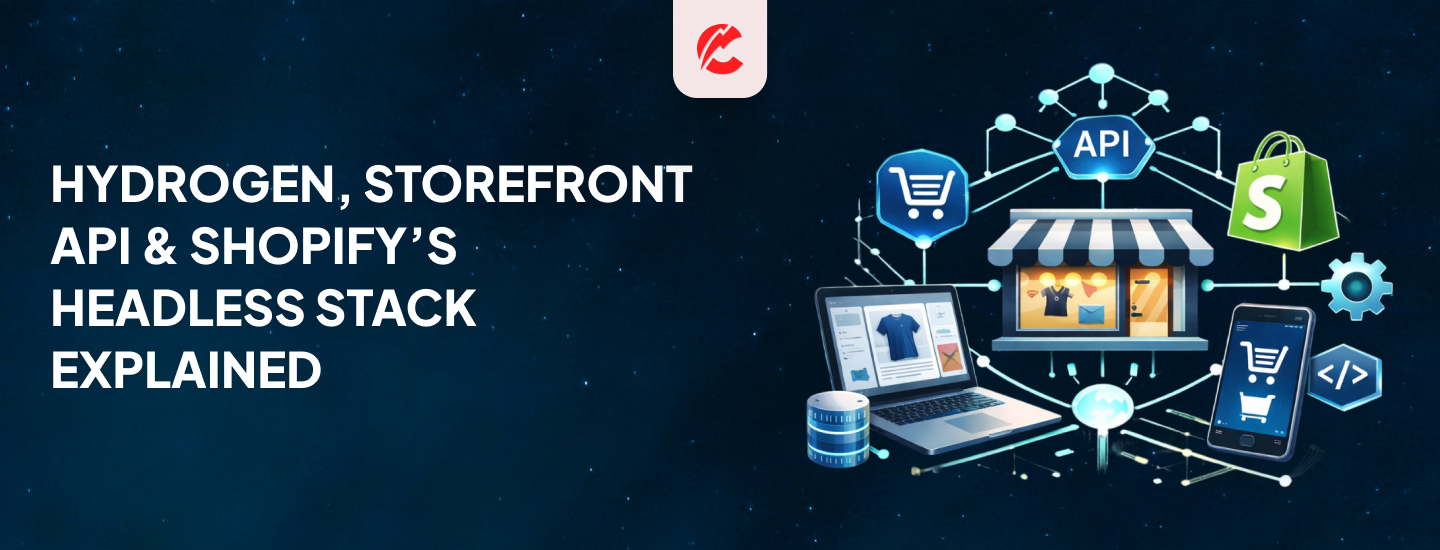
Introduction: The Technology Behind Headless Shopify
In our previous post, we covered what headless commerce is and who should consider it in 2026.
Now let’s go deeper.
If you’re considering headless, you’ll keep hearing three terms:
- Hydrogen
- Storefront API
- Oxygen
Together, they form Shopify’s modern headless infrastructure.
And yes — it’s all powered by Shopify.
This guide explains everything in plain English — no developer jargon required.
The Big Picture: How Shopify’s Headless Stack Works
Think of Shopify’s headless stack as a 3-layer system:
- Commerce Engine (Backend) – Shopify admin, products, checkout, payments
- API Layer – Storefront API
- Frontend + Hosting – Hydrogen + Oxygen
Let’s break each one down.
What Is Shopify Storefront API?
The Storefront API is the bridge between Shopify’s backend and your custom frontend.
It allows your website or app to:
- Pull product data
- Create carts
- Manage checkout sessions
- Fetch collections
- Handle customer accounts
- Process subscriptions
Without it, headless wouldn’t work.
Simple Explanation:
Your custom website asks Shopify:
“Show me this product.”
Shopify replies via API with product details.
That’s it.
Why Storefront API Matters in 2026
In competitive markets like the USA, UK, Canada, and Australia:
- Performance matters
- Real-time personalization matters
- Multi-country pricing matters
Storefront API allows:
- Dynamic pricing by region
- Personalized product feeds
- Real-time inventory sync
- Subscription management
- Custom checkout flows
It’s the foundation of advanced commerce.
What Is Shopify Hydrogen?
Shopify Hydrogen is Shopify’s React-based framework designed specifically for headless storefronts.
Instead of building everything from scratch, Hydrogen gives developers:
- Pre-built commerce components
- Product pages
- Cart logic
- Server-side rendering support
- Performance optimizations
Why Hydrogen Exists
Before Hydrogen, developers used frameworks like:
- Next.js
- Gatsby
- Custom React builds
Hydrogen simplifies and standardizes headless builds on Shopify.
Key Benefits of Hydrogen in 2026
Built for Performance
Hydrogen supports modern rendering techniques that improve:
- Core Web Vitals
- First Contentful Paint
- SEO performance
Commerce-Aware Components
Instead of coding product pages from zero, Hydrogen provides:
- Product components
- Cart utilities
- Variant selectors
- SEO helpers
This speeds up development significantly.’
International Support
Hydrogen integrates well with:
- Multi-currency stores
- Shopify Markets
- Geo-based routing
Perfect for brands expanding globally.
What Is Shopify Oxygen?
Shopify Oxygen is Shopify’s hosting platform for Hydrogen storefronts.
It provides:
- Global edge hosting
- CDN performance
- Seamless deployment
- Tight Shopify integration
Instead of hosting your headless store elsewhere, Oxygen allows you to deploy directly within Shopify’s ecosystem.
Why Oxygen Matters
Without Oxygen, you’d need:
- Third-party hosting
- DevOps setup
- CI/CD pipelines
- Infrastructure management
Oxygen simplifies this — especially for scaling brands.
How These 3 Work Together
Here’s the workflow:
- Shopify backend stores products & processes payments
- Storefront API sends product data to your frontend
- Hydrogen renders the custom storefront
- Oxygen hosts it globally
The result:
A fully custom website powered by Shopify’s commerce engine.
When Should You Use Shopify’s Native Headless Stack?
Ideal Scenarios
- High-traffic brands
- Global brands with localized storefronts
- Brands needing immersive storytelling
- Subscription-heavy businesses
- Complex product configurators
- Omnichannel strategies (apps + web)
When You Might Skip Hydrogen
Some brands still use:
- Next.js
- Custom frameworks
- Third-party hosting
Why?
- Existing dev team expertise
- Legacy architecture
- Highly specialized builds
Hydrogen isn’t mandatory — but it’s optimized for Shopify.
Performance & SEO in 2026
One of the biggest advantages of Shopify’s headless stack:
Server-side rendering (SSR) support.
This improves:
- Crawlability
- Page speed
- Structured data control
- Advanced schema flexibility
If implemented correctly, headless stores often outperform theme-based stores in organic rankings.
Cost Considerations
Going headless with Shopify’s stack involves:
- Development cost ($15K–$80K+)
- Ongoing maintenance
- Technical expertise
However, long-term benefits may include:
- Higher conversion rates
- Better scalability
- Lower performance bottlenecks
- Improved global selling capabilities
Common Misconceptions
“Hydrogen is only for developers.”
True — developers build it.
But decision-makers must understand it.
“Headless guarantees better sales.”
No. It enables better performance and UX — strategy still matters.
“It’s required for scaling.”
Many 8-figure brands still use optimized Shopify themes.
Headless is strategic — not mandatory.
2026 Strategic Outlook
Shopify’s headless ecosystem is maturing rapidly.
Expect in the coming years:
- Deeper AI integrations
- Smarter personalization layers
- Faster global edge rendering
- Simplified deployment workflows
For scaling brands in the USA, UK, Canada, and Australia — understanding Shopify’s headless stack is no longer optional.
Even if you don’t adopt it today.
Final Thoughts
Hydrogen, Storefront API, and Oxygen are not just technical tools.
They are infrastructure decisions.
If your brand:
- Competes on experience
- Expands internationally
- Requires advanced personalization
- Has strong technical resources
Then Shopify’s headless stack may be your long-term growth engine.