
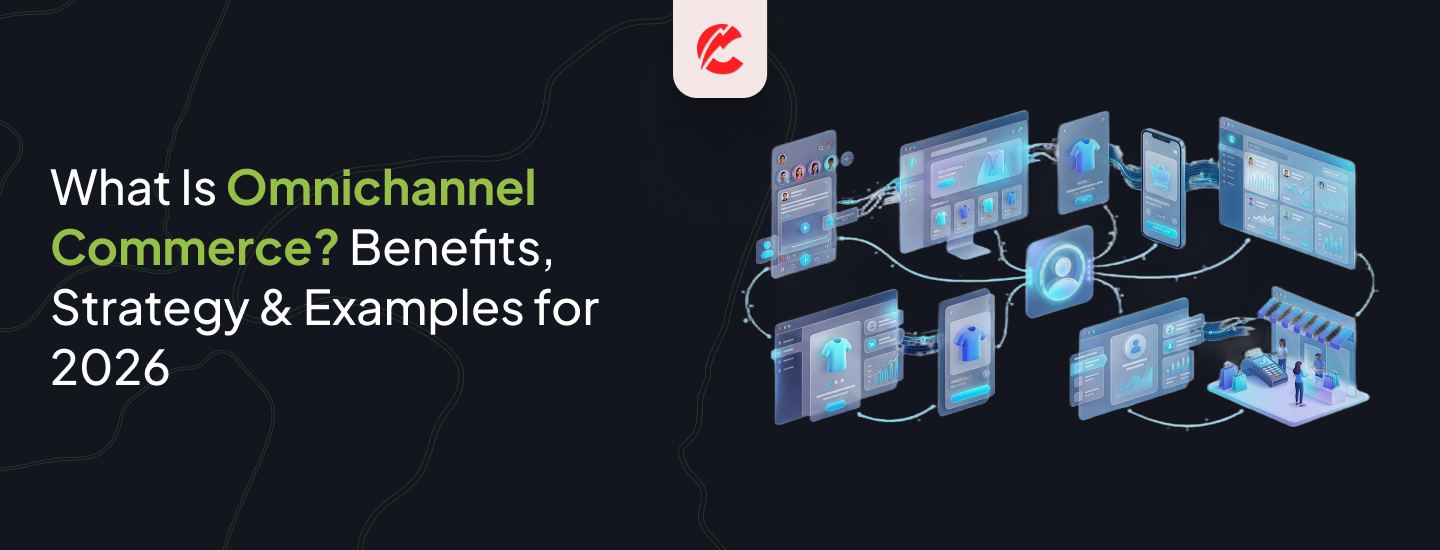
Customers no longer shop through a single channel. A buyer might discover a product on Instagram, compare prices on a mobile app, visit a physical store, and finally complete the purchase through a website. This shift in customer behavior has transformed the way businesses sell online and offline.
That’s where omnichannel commerce comes in.
Omnichannel commerce helps businesses create a connected shopping experience across all customer touchpoints. Whether someone shops through a website, mobile app, social media platform, marketplace, or retail store, the experience remains smooth and consistent.
In today’s competitive digital landscape, businesses that fail to offer seamless customer experiences often struggle to retain customers. Modern consumers expect convenience, personalization, and flexibility at every stage of the buying journey.
In this guide, you’ll learn what omnichannel commerce is, how it works, its key benefits, real-world examples, implementation strategies, common challenges, and future trends shaping the industry.
What Is Omnichannel Commerce?
Omnichannel commerce is a business strategy that integrates all sales and communication channels into one unified customer experience.
Instead of operating channels separately, omnichannel commerce connects them so customers can move smoothly between platforms without interruptions.
For example:
- A customer adds a product to their cart on a mobile app
- Later continues shopping on a laptop
- Chooses in-store pickup
- Receives personalized email updates after purchase
Everything works together as one connected system.
The main goal of omnichannel commerce is to create a seamless and personalized customer journey across all platforms.
How Omnichannel Commerce Works
Omnichannel commerce connects customer data, inventory systems, payment platforms, and communication channels into one ecosystem.
Here’s a simple example of how it works:
- A customer sees a product ad on social media
- They visit the ecommerce website
- The product remains saved in their cart
- They receive a personalized email reminder
- They complete the purchase through the mobile app
- The product is picked up from a nearby store
Every interaction stays synchronized.
This level of integration improves customer convenience and increases conversion rates for businesses.
Omnichannel Commerce vs Multichannel Commerce
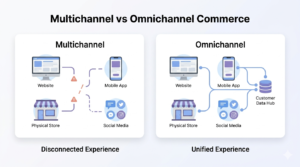
Many people confuse omnichannel commerce with multichannel commerce, but they are different.
Omnichannel Commerce vs Multichannel Commerce
| Aspect | Multichannel Commerce | Omnichannel Commerce |
|---|---|---|
| Definition | Selling through multiple independent channels | Integrated approach for seamless unified experience |
| Focus | Channel-centric / Product-focused | Customer-centric / Journey-focused |
| Channel Integration | Channels work separately (siloed) | Fully interconnected & synchronized |
| Customer Experience | Disconnected, inconsistent | Seamless & continuous across all channels |
| Data Management | Siloed data per channel | Single unified customer view |
| Personalization | Limited & channel-specific | Advanced, real-time & cross-channel |
| Inventory Management | Usually decentralized | Centralized visibility & fulfillment |
| Promotions & Messaging | Can be inconsistent | Fully consistent across channels |
| Implementation Complexity | Easier & faster to set up | More complex, needs strong integration |
| Main Benefit | Wider reach & visibility | Higher loyalty, retention & customer satisfaction |
| Relationship | Foundation stage | Advanced stage (builds on multichannel) |
In multichannel commerce, businesses sell through multiple platforms, but the channels often operate independently.
In omnichannel commerce, all channels work together to create one consistent customer experience.
Why Omnichannel Commerce Matters
Consumer expectations have changed dramatically over the last few years.
Customers now expect:
- Fast shopping experiences
- Consistent branding
- Personalized recommendations
- Flexible payment methods
- Easy returns and exchanges
- Cross-device shopping support
Businesses that deliver these experiences are more likely to build customer loyalty and increase revenue.
Omnichannel commerce helps brands meet these expectations efficiently.
Key Benefits of Omnichannel Commerce
1. Better Customer Experience
A connected shopping journey removes friction from the buying process.
Customers can switch between devices and platforms without losing progress, making shopping easier and more convenient.
2. Higher Customer Retention
Customers are more likely to return to brands that provide smooth and personalized experiences.
A positive omnichannel strategy strengthens long-term customer relationships.
3. Increased Sales and Conversions
When customers receive personalized recommendations and flexible shopping options, conversion rates improve significantly.
Businesses can also reduce cart abandonment through automated reminders and synchronized carts.
4. Improved Inventory Visibility
Omnichannel systems provide real-time inventory tracking across all channels.
This helps businesses avoid overselling or stock shortages.
5. Stronger Brand Consistency
Customers see the same messaging, branding, and customer service quality across every platform.
Consistency builds trust and credibility.
Real-World Examples of Omnichannel Commerce
Nike
Nike creates a seamless shopping experience through its website, mobile apps, retail stores, and membership ecosystem.
Customers can:
- Browse products online
- Reserve items in-store
- Access exclusive app offers
- Receive personalized recommendations
This connected ecosystem improves customer engagement and loyalty.
Starbucks
Starbucks uses omnichannel technology exceptionally well.
Its mobile app allows customers to:
- Order ahead
- Earn loyalty rewards
- Pay digitally
- Access personalized promotions
The experience remains consistent across stores and digital platforms.
Amazon
Amazon combines ecommerce, voice shopping, mobile apps, and fast delivery systems into one integrated experience.
Customers can start shopping on one device and continue on another without interruption.
Sephora
Sephora integrates online and offline beauty experiences through personalized recommendations, virtual try-ons, and in-store services.
Its omnichannel approach improves both engagement and customer satisfaction.
Omnichannel Commerce Strategy: Step-by-Step
Implementing omnichannel commerce requires careful planning and the right technology stack.
Here are the most effective strategies businesses should follow.
1. Centralize Customer Data
Customer data should be stored in one unified system.
This includes:
- Purchase history
- Browsing behavior
- Customer preferences
- Support interactions
A centralized database helps businesses deliver personalized experiences across channels.
2. Optimize Mobile Experience
Mobile commerce continues to grow rapidly.
Your mobile experience should include:
- Fast loading speed
- Responsive design
- Easy navigation
- Simple checkout process
A poor mobile experience can significantly reduce conversions.
3. Integrate Inventory Systems
Inventory synchronization is critical for omnichannel success.
Customers should see accurate product availability across:
- Websites
- Apps
- Retail stores
- Marketplaces
Real-time inventory updates prevent customer frustration.
4. Personalize Customer Experiences
Modern customers expect personalized shopping experiences.
Businesses can use AI and customer data to provide:
- Product recommendations
- Personalized emails
- Dynamic pricing
- Customized offers
Personalization improves engagement and sales.
5. Maintain Consistent Branding
Your messaging, visuals, and tone should remain consistent across every platform.
Consistency improves brand recognition and trust.
6. Enable Cross-Channel Support
Customers should be able to:
- Start shopping on one device
- Continue on another
- Access support across channels
- Return products through multiple methods
Cross-channel flexibility improves customer satisfaction.
Why Ecommerce Store Migration Matters in Omnichannel Commerce
As businesses expand across multiple sales channels, many companies eventually outgrow their existing ecommerce systems. Outdated platforms often struggle to support seamless omnichannel experiences, inventory synchronization, and advanced personalization features.
This is why many brands invest in professional ecommerce store migration services to move their online stores to scalable platforms that support modern customer expectations.
A successful migration helps businesses:
- Improve website performance
- Enable omnichannel integrations
- Enhance mobile shopping experiences
- Reduce technical limitations
- Support future business growth
Whether migrating from Magento to Shopify or moving from WooCommerce to BigCommerce, choosing the right migration strategy is critical for maintaining SEO rankings, customer data, and overall store functionality.
Best Omnichannel Commerce Platforms
Several platforms help businesses build omnichannel commerce systems.
1. Shopify
Best for:
- Small to medium businesses
- Ecommerce integration
- Omnichannel retail management
Key features:
- POS integration
- Inventory management
- Mobile commerce support
2. BigCommerce
Best for:
- Growing ecommerce brands
- Enterprise scalability
- Multi-channel selling
Key features:
- Marketplace integrations
- SEO tools
- Flexible APIs
3. Salesforce Commerce Cloud
Best for:
- Large enterprises
- AI-driven personalization
- Advanced customer data management
Key features:
- Customer journey tracking
- Automation tools
- AI-powered insights
Common Challenges of Omnichannel Commerce
Although omnichannel commerce offers many benefits, businesses often face implementation challenges.
Data Integration
Combining data from multiple platforms can be technically complex.
Inventory Synchronization
Managing real-time inventory across channels requires advanced systems.
Technology Costs
Omnichannel platforms and integrations can be expensive for smaller businesses.
Team Coordination
Marketing, sales, customer support, and operations teams must work together closely.
Customer Data Security
Businesses must protect customer information and comply with privacy regulations.
Future Trends in Omnichannel Commerce
The future of omnichannel commerce will be driven by emerging technologies and evolving customer expectations.
AI Personalization
Artificial intelligence will continue improving:
- Product recommendations
- Customer segmentation
- Predictive shopping experiences
Voice Commerce
Voice assistants and smart devices will influence future shopping behaviors.
Augmented Reality Shopping
AR technology allows customers to visualize products before purchasing.
This is especially useful in:
- Fashion
- Furniture
- Beauty industries
Unified Commerce Systems
Businesses are moving toward fully unified systems where all backend operations work from one platform.
Predictive Analytics
Brands will increasingly use predictive data to anticipate customer behavior and optimize inventory management.
Frequently Asked Questions
What is omnichannel commerce?
Omnichannel commerce is a strategy that connects all sales and communication channels into one seamless customer experience.
What is the difference between omnichannel and multichannel commerce?
Multichannel commerce uses multiple separate channels, while omnichannel commerce integrates all channels into one connected system.
Which industries benefit from omnichannel commerce?
Industries such as retail, fashion, beauty, electronics, healthcare, and grocery benefit significantly from omnichannel strategies.
What are the biggest challenges in omnichannel commerce?
Common challenges include data integration, inventory synchronization, technology costs, and maintaining consistent customer experiences.
Conclusion
Omnichannel commerce is no longer optional for modern businesses. Customers expect seamless experiences across websites, mobile apps, social media platforms, and physical stores.
Businesses that successfully integrate their channels can improve customer satisfaction, strengthen loyalty, and increase long-term revenue.
As technology continues to evolve, omnichannel commerce will become even more important in shaping the future of retail and ecommerce.
Brands that invest in connected customer experiences today will have a significant competitive advantage in the years ahead.